|
|
Dr Bruce Durie BSc (Hons) PhD OMLJ FIGRSConsultant Genealogist and Heraldist, Author, Broadcaster, Lecturer ● Now incorporating Ancestral Scotland Ltd (www.ancestralscots.com) |
|
|
|
Not much, to be frank, other than the right to be
addressed as “Baron of Mickle-Muckle” or whatever it’s called.
Note, that’s different from “Baron Mickle-Muckle”, which would
indicate a Peerage. However, the new Baron may petition the Lord Lyon
for a grant of Arms. If you can’t actually prove Scottish ancestry,
sometimes a barony is the only way to bring yourself within the Lord
Lyon’s jurisdiction. The Arms granted will differ from Arms obtained
the usual way (by genealogy) except for the form of the helmet, which is
garnished with gold. Since the time of Lord Lyon David Sellar, the
Letters Patent will not make any reference to the barony or the title
“Baron of...”, or include words like “noble”, “nobility”
etc., or have a “Chapeau of Maintenance” (something introduced in
the 1930s), or a feudo-baronial mantle. Nor will Supporters be granted
by virtue of a barony alone. (There are two exceptions to this –older
baronies chartered before 1587, and if you inherit, rather than buy, a
Barony that has been in continuous ownership by your family.) By custom
– not by any edict of the Lord Lyon, who does not oversee such matters
– a Baron may wear two eagle feathers (an ordinary Armiger wears one
and a Chief three). Incidentally, the wife of a male Feudal Baron is
addressed as “Lady of...” but not “Baroness of...”.
|
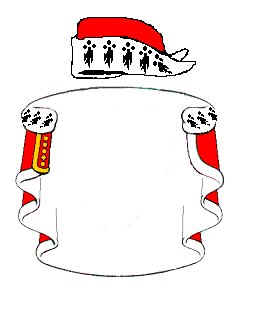
The chapeau of mainenance and the Feudo-baronial mantle (Gules doubled silk Argent, fur-edged of miniver and collared in ermine, fastened on the right shoulder by five spherical buttons Or) are no longer granted with Arms to a Scottish Feudal Baron. |
||||||
|
So, you get very little
for your $115,000 or more except a warm feeling, the title “Baron
of...”, the right to ask to be included in the Scottish Barony
Register (unofficial, but recognised) and the possibility of a Coat of
Arms. Remember that Arms are not themselves a “right” as they are
granted by grace – so be nice to the Lord Lyon. Also, do not expect to
get any special treatment in the locality of your barony – most locals
won’t even recognise the name of it, and may never have heard of a
Feudal Barony as a concept. But it’s certainly not like buying a
non-existent bridge, or some Louisiana swampland, or beach-front
property in Nevada. Find a Barony for sale, get a knowledgeable Scottish solicitor in tow to handle the sale (I can suggest a couple), get it in the Scottish Barony Register (usually £700, about US$850), then find someone to Petition the Lord Lyon for Arms on your behalf (likely to cost some £4,000 or US$5,500 or more, depending on how fancy you get). Lord
Clyde’s seminal analysis of the nature of a barony in Scots law in his
1990 decision in the case of Spencer-Thomas of Buquhollie v Newell
relating to the Barony of Freswick: ‘A barony is an estate of land created by a direct grant from the Crown. The original grant is said to have “erected” the lands into a libera baronia, a freehold barony (Bell’s Principles, s. 750). The right can be conferred only by the Crown and cannot be transmitted by the baron to be held base of himself (Bell’s Dictionary (7th ed.) p 99; Bankton’s Institute, II.iii.86). In feudal classification a barony falls into the class of noble as opposed to ignoble feus. That classification is discussed by Craig (Jus Feudale, I. X. 16) and Bankton (II.iii.83). In Scotland the distinction was recognised between the greater barons and the lesser barons, the former acquiring such titles as Duke or Earl. It was at the earliest a territorial dignity as distinct from the later personal peerage. Thus when one was divested of an estate the title of honour ceased (Bankton, II.iii.84). In the feudal system, however, whether the dignity was that of a baron or of the greater dignity of an earldom, the feudal effects were the same (Erskine’s Institute, II.iii.46). As Stair put it (Institutions II.iii.45): “Erection is, when lands are not only united in one tenement, but are erected into the dignity of a barony; which comprehendeth lordship, earldom &c, all of which are but more noble titles of a barony, having the like feudal effects”. The grant of a barony carried with it the right to sit in Parliament, but as the number of lesser barons increased, steps were taken from 1427 onwards to restrict attendance to a selected number of them (Erskine’s Institute I.iii.3). The grant in liberam baroniam also carried a civil and criminal jurisdiction (Erskine’s Institute I.iv.25). But Erskine also states that while such an erection or confirmation is necessary to constitute a baron “in the strict law sense of the word”, all who hold lands immediately of the Crown to a certain yearly extent are barons in respect of the title to elect or be elected into Parliament (Institute I.iv.25).’ |
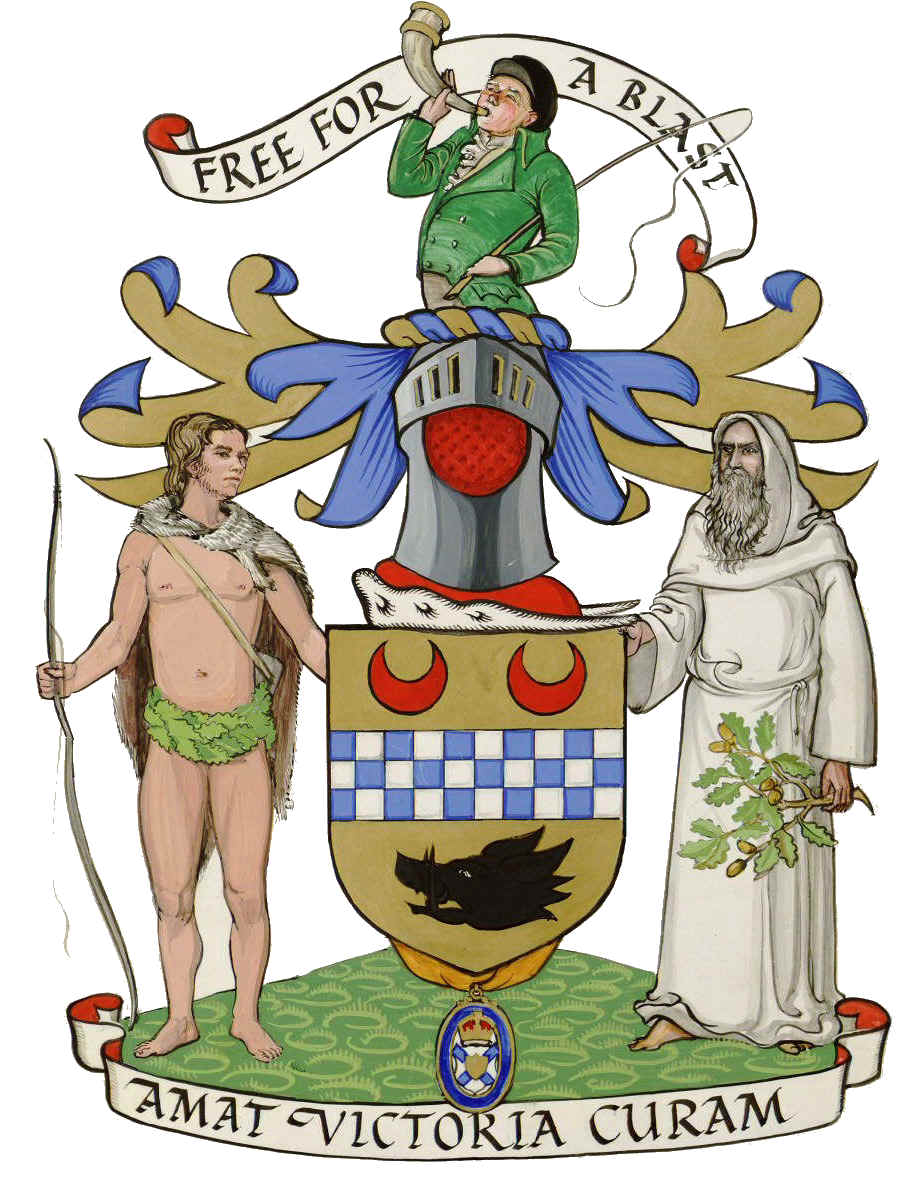
Certain Scottish Feudal Barons have supporters - mostly if their ancestors had held the barony while likely to be summoned to sit in the Scottish Parliament before an Act of 1587. An example is Sir John Dutton Clerk of Penicuik, Baronet, Baron of Penicuik and Lasswade. Some barons may have supporters for other reasons - they are a peer or chief, for instance. |
||||||
Links:
|
Bruce Durie regularly consults and advises on matters relation to Baronies, and their Coats of Arms.
Contact us HERE and include your name, location and query
|
Contact: gen@brucedurie.co.uk
e mail to webmaster@brucedurie.co.uk with
questions or comments about this web site.
|